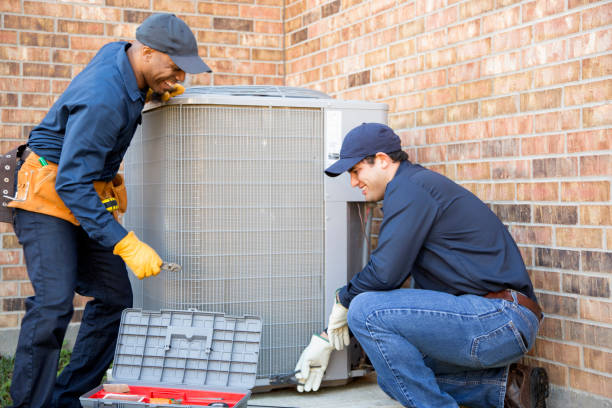
The HVAC system requires regular inspection and repair for it to last long. The HVAC system controls the temperatures in the house and makes the air clean for you to have a healthy living space. These are some of the parts of the HVAC system. You can discover more info here.
A plenum is an air-distribution box that is attached directly to the supply outlet of the HVAC. This part of the HVAC heats or cools the air to control the room temperatures.
The ductwork is connected to the plenum to distribute the heated or cooled air to all the rooms in the house. Rooms get air at equal pressure because the plenum equalizes the air pressure that is being distributed. You can discover more info here.
A home’s furnace, heat pump or air conditioner can never miss air filters. A cloth or a spun of fiberglass, or pleated papers are the materials that are used to make HVAC air filters that are enclosed in a cardboard frame. Air filters trap and hold pollen, mold and mold-pores, excess humidity, dust, fibers and lint, hair and animal fur, bacteria and more air contaminants so that the air is safe to inhale. The MERV rating on the air filter will determine its quality. From the best to the lowest quality of the air filter, the ratings are MERV 13-16, MERV 9-12, MERV 6-8, and MERV 1-4. Please view this site https://smallbusiness.chron.com/tips-starting-hvac-business-2375.html for further details.
The three types of supply fans of the HVAC systems are axial fans, forward-curved centrifugal fans, and backward-inclined fans. Supply fans accelerate the flow of air if it does not occur naturally or when you need more air to flow. You can control the speed of the fans. The cheapest and the simplest to install is the axial fan, and it is used where there is static or low-pressure airflow. Centrifugal fan works better than an axial fan but is slower than the back-ward inclined fans. Backward inclined fans are used in industrial premises.
Some people refer to the heating and cooling coils as an evaporator or indoor coils. The air gets warm from the heat that is transferred by the coils. They last for approximately 10 to 20 years or depending on the durability duration and maintenance level of the HVAC.
There are steam and hot water boilers that are fueled by biogas, gas, oil, electricity or wood. They come in various designs and sizes; therefore, the way the piping is installed differs with the boiler. Water tube boilers, fire tube boiler and condensing boilers are some of the types of HVAC boilers. Use boilers that do not pollute the environment to regulate environmental pollution.
 Site Title